The Best Ways to Achieve Optimized Size Reduction with Testing
When it comes to producing consistent, high-quality aggregate products and other bulk materials, size reduction is often one of the most critical—and energy-intensive—steps in the process. For many companies, partnering with a testing plant offers a smarter way to achieve precise particle sizing without the capital investment, maintenance burden, or downtime risk of running their own equipment.
Here are the top five ways size reduction is best accomplished through a testing plant:
Access to Specialized Equipment
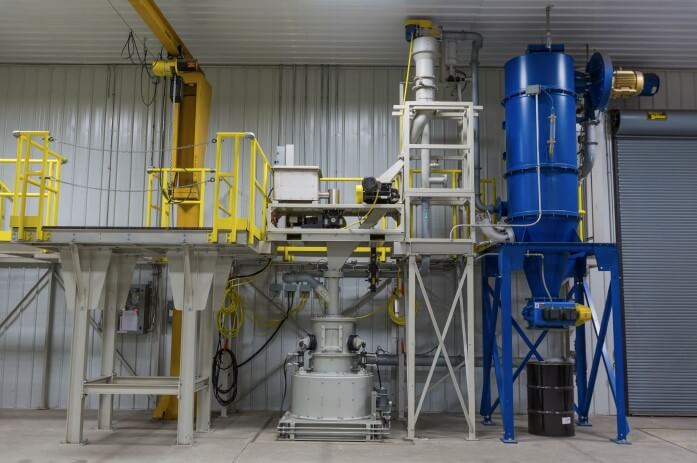
Stedman operates a wide range of advanced size reduction machinery—such as cage mills, hammer mills, impact crushers, and pulverizers—that are configured for different materials and end-product specifications. Instead of being limited to one type of equipment, customers benefit from our ability to match each material with the most efficient and economical reduction method. This ensures consistent particle size, optimized throughput, and minimal waste.
Expertise in Material Characteristics
Not all materials behave the same under mechanical stress. Aggregates, minerals, chemicals, and ceramics each have uniquehardness, moisture, and friability characteristics. Stedman’s experienced material processors understand how to adjust feed rates and rotor speeds to prevent over-grinding or excessive fines. Their material science knowledge and expertise results in repeatable quality and improved yield, especially for challenging materials. Stedman’s catalog of past material processing allows for quick setup and size reduction. Over the past 190 years, we’ve pretty much seen it all.
Cost-Effective Production Without Capital Investment
Performing a cost/benefit analysis on purchasing and maintaining size reduction equipment can help determine if tolling is a better option than capital investment. By outsourcing to a testing plant, companies eliminate overhead costs and gain access to industrial-scale capacity on demand. This model is ideal for pilot runs, seasonal production spikes, or product testing before committing to new equipment.
Built-In Quality Control and Process Documentation
Stedman provides detailed reporting on every batch, including particle size distribution, moisture content, and throughput data. Stedman is equipped with an in-house testing lab to verify results against customer specifications. This quality assurance ensures product uniformity and compliance with industry standards—something that’s often difficult to maintain in-house without dedicated resources.
Flexibility and Scalability
Testing plants offer unmatched flexibility for businesses that need to scale production quickly or handle multiple material types. Whether processing a few tons or hundreds, Stedman can adapt production runs, fine-tune parameters, and switch between materials efficiently. This scalability allows manufacturers to respond faster to market demand while maintaining tight control over quality.
The Bottom Line
Using Stedman’s testing plant for size reduction is more than a convenience—it’s a strategic move that combines technical expertise, advanced equipment, and cost savings. From pilot projects to full-scale production, toll processing provides the precision and efficiency needed to keep materials flowing and businesses growing.