
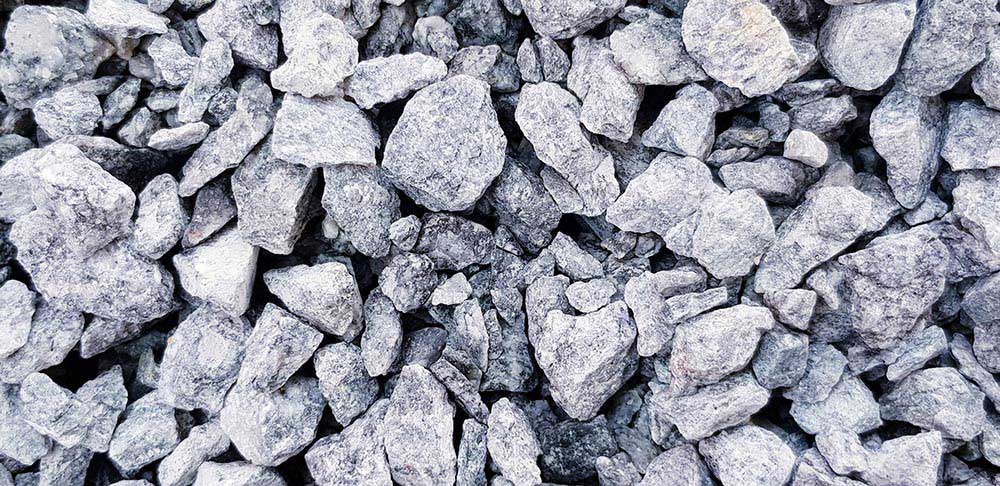
How to Choose The Right Aggregate Crushing Equipment
Primary crushers are first in a typical size reduction operation. Primaries like our Mega-Slam™ horizontal shaft impactor are commonly used in the aggregates industry to handle large feed sizes. The Grand-Slam™ HSI is well suited as secondary crusher for aggregate production for a wide range of materials including limestone, frac sand, gravel, stone, and more. Tertiary crushers are commonly used in the aggregates industry for final particle shaping to increase cubicity, and to produce a product size beyond what is capable from a primary or secondary. This stage of crushing is typically accomplished using a vertical shaft impactor as an aggregate pulverizer or coarse, medium-fine, or fine grinding cage mill.
How the Three Stages of an Aggregate Crushing Circuit Work Together
Most aggregate production operations run material through a staged circuit rather than a single machine. Each stage has a defined role, and the output of one stage becomes the feed condition for the next. Understanding where each machine fits in that sequence is the most important factor in selecting rock crushing equipment for your plant.
A primary crusher receives raw feed at its largest incoming size, typically directly from the quarry face or initial processing point, and reduces it to an intermediate product for downstream use. A secondary crusher then processes that intermediate material into a more refined output with tighter gradation control. At the tertiary stage, the circuit either produces the finished aggregate gradation, achieves the cubical particle shape that certain concrete and asphalt markets require, or grinds to the fine mesh sizes that agricultural and industrial product markets specify.
Selecting aggregate crushing equipment based on throughput capacity alone, without accounting for how each machine integrates into the full circuit, is one of the more common and costly mistakes in plant design. Our engineers work through the complete circuit evaluation with you before any equipment recommendation is made.
Aggregate & Rock Crusher Applications
- Limestone
- Sand & Gravel
- Gypsum
- Frac Sand
- Roof Shingles
- Sandstone
- Lightweight Aggregates
- Shale
- Chicken Grit
- Animal Feed Supplements
- Agricultural Lime
- Quicklime
The downstream markets for processed limestone extend further than most aggregate producers anticipate. Pharmaceutical manufacturing, toothpaste, paint, paper production, caulking, glass, flooring materials, carpets, and plastics all use finely ground limestone as a processed input. Common antacids are nearly 100% finely ground limestone. Farmers apply ground limestone to neutralize soil acidity, reducing fertilizer costs while improving crop yields. If your operation produces limestone for any of these markets, the applicable output specification differs substantially from standard aggregate gradation, and equipment selection follows from that difference.
Systems Design-Build
A rock crusher is one piece of equipment within a larger processing system, and how that system is designed around it has as much to do with plant performance as the crusher itself. Most aggregate plants require structures, conveyors, screens, chutes, hoppers, dust collection equipment, and storage capacity in addition to the crushing machinery. Operations that source these elements separately, without a unified design that accounts for how they interact, regularly encounter integration problems after installation that add cost and disrupt production startup.
Our Systems Design-Build capability covers dry material systems engineering across all of these areas. From small retrofits where a single machine is added to an existing plant, to extensive turnkey facilities built from the ground up, our engineers work directly with the customer from the initial problem definition through commissioning. Every project starts with a clear definition of the desired outcome: finished product specification, required throughput, site constraints, and operational priorities. Equipment selection follows from that definition, not the other way around.
Duff Quarry Inc. is a documented example of this process. Working with Innovative Processing Solutions, an affiliate of Stedman, we incorporated two large industrial rock crushers into Duff Quarry's limestone processing operation. Their previous equipment required extensive maintenance that cut into production time. With the Stedman-designed plant installed and running, Duff Quarry now produces up to 1.5 million tons of limestone per year at full capacity, spending considerably less time on maintenance than before.
Rock & Aggregate Crushing Equipment


Don't Forget Our Other Size Reduction Equipment!
A complete system requires structures, conveyors, cleaners, and other equipment, along with the HSI. Contact us if you need design or installation help from Stedman with more than just your Grand-Slam asphalt recycler.
View All Size Reduction Equipment


Test Before You Buy™
The Stedman Testing and Toll Processing Facility is the place to test your material in our full size equipment. If it can be crushed, ground, pulverized or mixed, chances are we’ve done it. We have more than 10,000 test reports to help get you to the best solution quickly. To learn more about what to expect from testing, read our article that ran in POWDER BULK ENGINEERING magazine.
Aggregate Crushing Equipment Case Studies
Cage Mill Meets Most Aglime Specifications in One Pass
The 4-Row Cage Mill allows Aglime producers to meet most state Aglime specifications in an open circuit. It will economically produce Aglime to any specification for both large and small producers. The 4-Row Cage Mill feed does not have to be dry. Clogging, jamming and plugging are eliminated with aggregate pulverizer. Available with capacities as low as 5 TPH up to 100 TPH, the 4-Row Cage Mill produces consistent product quality as an aglime crushing equipment.
Limestone Quarry Increases Production Capacity to 1.5 Million tons Yearly
Stedman Machine and Innovative Processing Solutions, an affiliate of Stedman, worked with Duff Quarry Inc. to incorporate two large industrial crushers to handle the size of limestone crushed annually. Their previous machines required a great amount of maintenance, but with Stedman machines, Duff Quarry Inc. spends less time fixing and more time crushing. With the installed plant and crushers, the quarry can produce up to 1.5 million tons of limestone a year running at full capacity.
Aggregates Industry Association Memberships
Stedman Machine Company is involved in professional organizations to better understand the knowledge and skills needed to serve our customers in the Aggregates Industry. These memberships give us better insight into the standards of the industry, updates to new and more efficient technologies and to the wants and needs of our customers. With the information obtained from our memberships, we can safely maintain the highest level of performance. Aggregate Industry associations include:
- IAAP (Illinois Association of Aggregate Producers)
- IMAA (Indiana Mineral Aggregates Association)
- KCSA (Kentucky Crushed Stone Association)
- NSSGA (National Stone, Sand & Gravel Association)
- OAIMA (Ohio Aggregates & Industrial Minerals Association)
- MAA
Frequently Asked Questions
A cone crusher squeezes feed between a rotating mantle and a concave bowl, breaking it under sustained compression. It is commonly used in secondary and tertiary stages for hard, highly abrasive rock, where that type of wear surface holds up better over time than impact-style components. An impact crusher uses kinetic energy. Feed contacts blow bars at high rotor speed and fractures on contact rather than under sustained force. For moderately hard, friable materials like limestone and sandstone, impact crushing typically delivers a higher reduction ratio, a more cubical product shape, and lower operating cost per ton. For very hard, high-abrasion stone, a cone crusher is often the more economical long-term choice because wear rates on impact-style components become difficult to sustain. The right answer for your operation depends on your material's hardness and abrasion index, which our testing facility can document before you commit to equipment.
The number of stages comes down to three variables: the size gap between your raw feed and your finished product specification, your required hourly throughput, and how your material behaves through the reduction process. Some operations produce a finished aggregate product in two stages. Others need three, either because the target output gradation is finer than two stages can deliver at the required volume, or because the finished product requires a cubical particle shape that only tertiary VSI processing produces consistently. We evaluate the complete production requirement before recommending a circuit configuration, and we can run your material through our testing facility to confirm what each stage achieves under production-representative conditions.
A primary crusher handles the first reduction stage, taking the largest raw feed sizes and breaking them to an intermediate product. A secondary crusher processes that intermediate material into a more refined output, and this is the stage where gradation consistency starts to matter most against finished product specifications. A tertiary crusher or fine grind machine produces the finished product to specification, whether that is a specific aggregate gradation, a cubical particle shape, or a fine mesh size for agricultural or industrial processing. Each stage uses different machine configurations, and the output from each stage must be matched to the feed requirement of what follows it.
Many aggregate operations run more than one material type through the same crushing circuit, adjusting breaker plate position or rotor speed to shift the output range as needed. Whether a single machine can handle multiple materials economically depends on how different those materials are in hardness and abrasiveness. Running a high-abrasion material through a machine configured for softer feed accelerates blow bar and breaker plate wear in ways that are easy to underestimate during budgeting. If your site processes materials with substantially different abrasion characteristics, we can assess the specific combination and give you a realistic picture of the wear rate and operating cost implications before the circuit is configured.
Frac sand is high-purity silica sand used in hydraulic fracturing to hold open fractures in oil and gas formations and allow hydrocarbons to flow. It must meet precise specifications for particle size, roundness, sphericity, and crush strength, requirements that are substantially tighter than standard aggregate gradation. VSI crushing is the standard production method because the high-speed impact mechanism produces a more rounded, spherical particle than compression-style crushing can achieve. After VSI reduction, the material typically goes through multiple stages of screening and washing to reach finished product specification. Our V-Slam VSI is used in frac sand processing circuits for this reason.
Yes. Our parts and service department operates 24 hours a day and carries a stocked inventory of wear parts for our full equipment line. Blow bars, breaker plates, cage mill bars, and other high-wear components are available when your production schedule requires them, not on extended lead times that idle your plant. For aggregate operations running continuous or near-continuous schedules, parts availability and service response time carry as much operational weight as the initial equipment selection, and we treat them accordingly.
Contact Us
Our 24 hour parts and service department along with our inventory of wear parts allow us to provide the fastest response time for parts and service.