
Our Clay and Brick Crusher Equipment Line
We offer impact-based size reduction equipment for the brick, clay, and ceramics industries in configurations that address the primary and secondary crushing stages most common in grinding room operations. All equipment is supported by our 24-hour parts and service department with a stocked wear parts inventory, and all machines are available for material testing at our Aurora, Indiana facility before purchase.
We offer impact-based size reduction equipment for the brick, clay, and ceramics industries in configurations that address the primary and secondary crushing stages most common in grinding room operations. All equipment is supported by our 24-hour parts and service department with a stocked wear parts inventory, and all machines are available for material testing at our Aurora, Indiana facility before purchase.
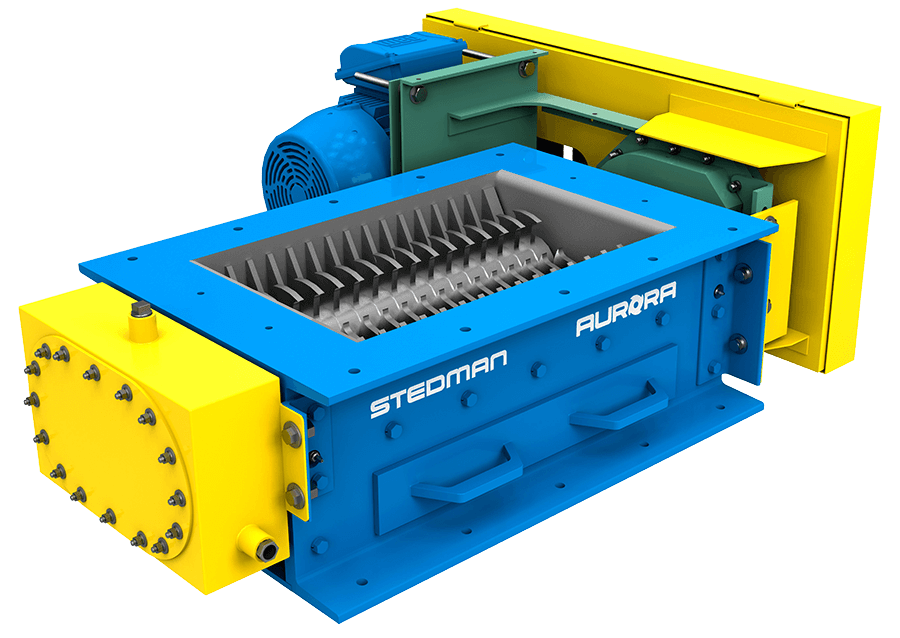
The Grand-Slam is our secondary impact crusher, positioned downstream to process material from the primary stage into a more refined output with tighter gradation control. In a brick or ceramics plant, the secondary stage is where particle size distribution begins to matter directly against the product specification the plant is producing. The Grand-Slam handles the full range of brick and ceramic materials at the secondary stage, including fire clay, grog, whiteware, and tile feedstocks. Front and rear opening housings provide direct access to internal components, keeping maintenance windows short and reducing the downtime that has historically been one of the most significant operating cost drivers in grinding room operations.
Clay & Brick Size Reduction Equipment


View All Size Reduction Equipment


Materials We Process in Brick, Clay and Ceramics Plants
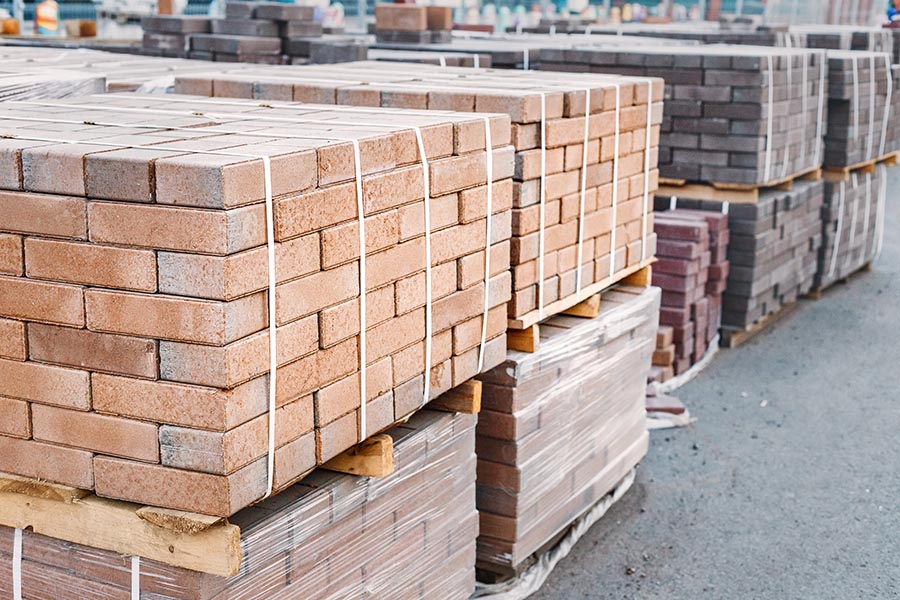
Our industrial brick crusher and clay crusher machines process the full range of materials that move through brick manufacturing, ceramics production, and refractory plant grinding rooms. On the raw material side, this includes clay, shale, fire clay, and bentonite clay at various moisture levels and particle size ranges. On the processed and recycled material side, our equipment handles grog (pre-fired clay reintroduced into production batches), whiteware scrap, pavers, floor tile, roof tile, and residential and commercial facing brick returned to the circuit as recycled feed.
Each of these materials presents different challenges. Shale is relatively soft but can carry abrasive mineral inclusions. Grog is hard and brittle, fracturing cleanly but wearing on impact surfaces at a rate that depends on the firing temperature and mineral composition of the source material. Bentonite clay has handling characteristics at certain moisture levels that complicate standard crushing circuit design. We have processed all of these materials at our Aurora, Indiana testing facility and maintain test reports on material behavior, output gradation, and wear rates that inform our equipment recommendations before a purchase decision is made.
Test Before You Buy™
The Stedman Testing and Toll Processing Facility is the place to test your material in our full size equipment. If it can be crushed, ground, pulverized or mixed, chances are we’ve done it. We have more than 10,000 test reports to help get you to the best solution quickly. To learn more about what to expect from testing, read our article that ran in POWDER BULK ENGINEERING magazine.
Testimonials
Robinson Brick Reduces Grinding Downtime and Increase Efficiency
Robinson Brick is known throughout the industry for trying new and innovative things with their equipment. In 1998, it became the first facing brick manufacturer in North America to be registered under the ISO 9001 standard. It continually upgrades its production operation, paying careful attention to quality. When their hammer mill crushers were taking too much downtime to fix, they turned to Stedman Machine. Not only was Robinson satisfied with the machines, they were pleased with the quality of service provided by Stedman.
Whenever we need assistance, Stedman has been right there. The Stedman guys know what they are doing and we can get a hold of them during off hours and on the weekend. We are very pleased with the Stedman impactor. It was the right choice. It has eliminated grinding downtime in a big way. Tony Fabrizio, Robinson Brick Director of Manufacturing and R&D
Brick & Clay Crushing Industry Association Memberships
Stedman Machine Company is involved in professional organizations to better understand the knowledge and skills needed to serve our customers in the Brick & Clay Crushing Industry. These memberships give us better insight into the standards of the industry, updates to new and more efficient technologies and to the wants and needs of our customers. With the information obtained from our memberships, we can safely maintain the highest level of performance for all our industrial clay & brick crushers. Brick & Clay associations include:
- NBRC (National Brick Research Center)
- ACerS
Frequently Asked Questions
Grog is pre-fired clay that is reintroduced into a fresh clay batch during brick or ceramics production. It is used to control shrinkage during firing, adjust the texture of the finished product's surface, and influence the density and porosity of the fired material. The particle size of the grog has a direct effect on all three of these outcomes. Coarser grog produces a rougher texture and higher porosity. Finer grog produces a denser, smoother result. Most brick and ceramics formulations specify a target grog gradation as part of the batch recipe, and the crusher handling the grog needs to produce a consistent output that stays within that specification across production runs. Our Grand-Slam HSI and the other equipment in our secondary processing line are used for grog crushing in brick and ceramics plants where consistent particle size control is a production requirement.
Roller mills were the standard grinding room equipment in brick plants for decades because they handled the abrasive, variable-hardness nature of clay and shale inputs without catastrophic failure. The tradeoff was high maintenance frequency, significant wear part costs, and the need for frequent gap adjustment to maintain output specification. The rollers themselves required regular resurfacing or replacement, and the adjustment mechanisms needed operator attention to prevent gradation drift during a production run. Stedman's introduction of impact-based crushing technology for the brick and clay industry over 20 years ago offered an alternative with lower maintenance requirements, lower wear parts costs, and lower initial capital cost for grinding room equipment. The millions of dollars in industry-wide savings that followed came from reducing the total cost of ownership over the equipment's service life, not just from the purchase price.
Whether a single machine can handle both materials economically depends on how different they are in hardness and abrasiveness. Raw shale and fired brick or grog are substantially different materials. Fired brick and grog are harder and more abrasive than unfired shale, and running them through a machine configured for softer feed accelerates blow bar and breaker plate wear faster than operating cost projections based on the softer material would predict. Many brick plants run separate machines or separate circuits for raw material preparation and recycled grog processing. If your plant needs to process both material types and is evaluating whether one machine or two is the right approach, submitting samples of both materials for testing at our Aurora facility is the most direct way to get an answer based on measured wear rates rather than estimates.
Particle size requirements in brick manufacturing vary by product type and by plant-specific formulations. Facing brick, floor tile, roof tile, and refractory fire brick each carry different body preparation specifications, and plants that produce multiple product lines often work to different particle size targets depending on what is running. In practice, output gradation is controlled by adjusting breaker plate position on an HSI crusher, changing screen or grate bar opening size on hammer mill configurations, or adjusting cage mill parameters. Our test reports on brick and clay materials include particle size distribution curves produced under documented operating conditions, which gives customers a realistic picture of what each machine configuration achieves on their specific material before the equipment is installed.
Raw clay at elevated moisture levels does not process the same way dry clay does. Material above a certain moisture threshold tends to smear rather than fracture under impact, which can clog discharge openings, accumulate on rotor components, and cause the kind of operational disruptions that translate directly into grinding room downtime. The acceptable moisture range depends on the specific clay mineral composition, the machine configuration, and the target output specification. Some raw clay inputs require partial drying before they enter the primary crusher. Others can be processed at field moisture levels without issue. The safest way to determine the appropriate moisture range for your specific clay is to run a sample through our testing facility, where we can document how it behaves at different moisture levels before you finalize your plant design or equipment selection.
In brick plant practice, the terms are often used interchangeably for equipment that reduces raw or recycled clay to a usable feedstock particle size. More precisely, crushing refers to the initial high-reduction stage where large feed is broken down, and grinding refers to further refinement toward finer particle size targets. In modern brick plant grinding rooms, the distinction matters in terms of which machine is doing which job. An HSI crusher handles the high-reduction primary and secondary stages. A cage mill or hammer mill handles the finer grind stages where the output specification requires a particle size distribution that an impact crusher alone cannot consistently achieve. Our equipment line covers both stages, and our engineers can help define which combination is appropriate for your specific material inputs and product requirements.
Contact Us
Our 24 hour parts and service department along with our inventory of wear parts allow us to provide the fastest response time for parts and service.