
The Difference Between HSI & VSI
For aggregate producers, deciding between a vertical shaft impactor (VSI) and a horizontal shaft impactor (HSI) is less about shaft orientation and more about how each machine performs in specific applications. While both use impact crushing to break down material, their orientation, output characteristics, and ideal use cases are different. It’s those differences that directly impact downstream performance and operational efficiency.
Vertical vs. Horizontal
The primary mechanical distinction of the rotor orientation—vertical vs. horizontal—influences everything from end product gradation to wear patterns.
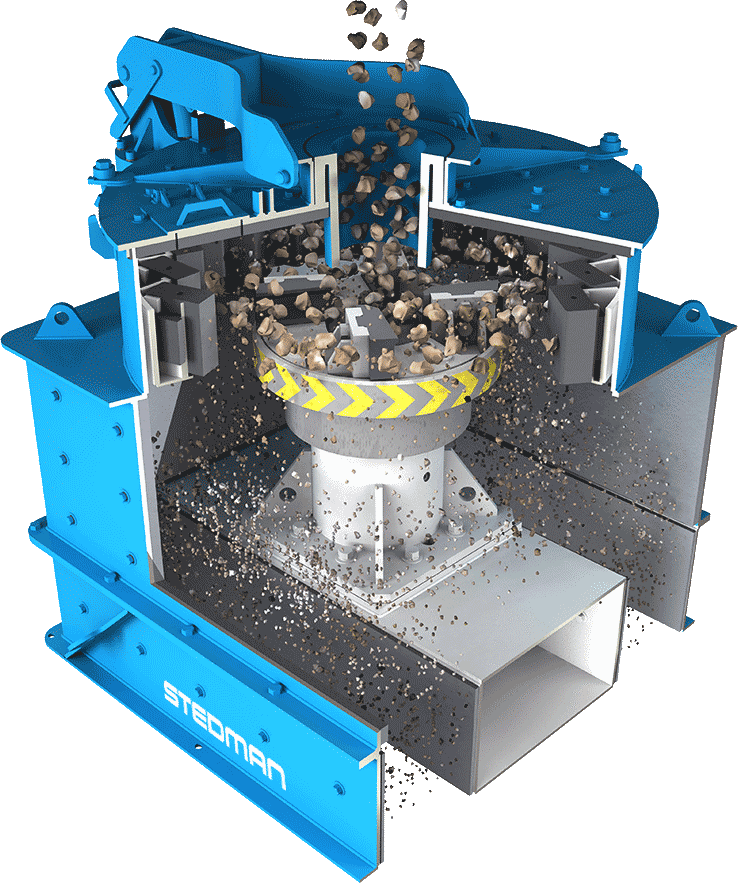
- VSI crushers operate on high-speed centrifugal force, accelerating material outward from a central rotor to create high-velocity impacts against anvils or other aggregate. This action is best suited for refining and shaping material after initial reduction, especially where particle shape and gradation are critical.
- HSI crushers, by contrast, rely on material impacting on rotating breaker bars and then deflected against stationary breaker plates. This makes HSIs more efficient in primary and secondary reduction of softer to medium-hard materials, especially when processing larger feed sizes.
Output Characteristics and Product Quality
The most significant operational differences are between the final product characteristics:
- VSIs produce a finer, cubical, and more consistently graded product, ideal for asphalt fines, manufactured sand, and other applications where shape and texture matter—particularly in concrete mix design or surface paving layers.
- HSIs produce a coarser product, which is preferable for certain base materials, roadstone, or where higher throughput is preferred over precise shape.
This difference makes VSIs a better fit for end-stage refinement or when material must meet strict specs for shape and angularity. HSIs, on the other hand, are the workhorses of high-volume material processing at earlier stages and offer high size reduction ratios that can allow for more simplified system layout.
Material Considerations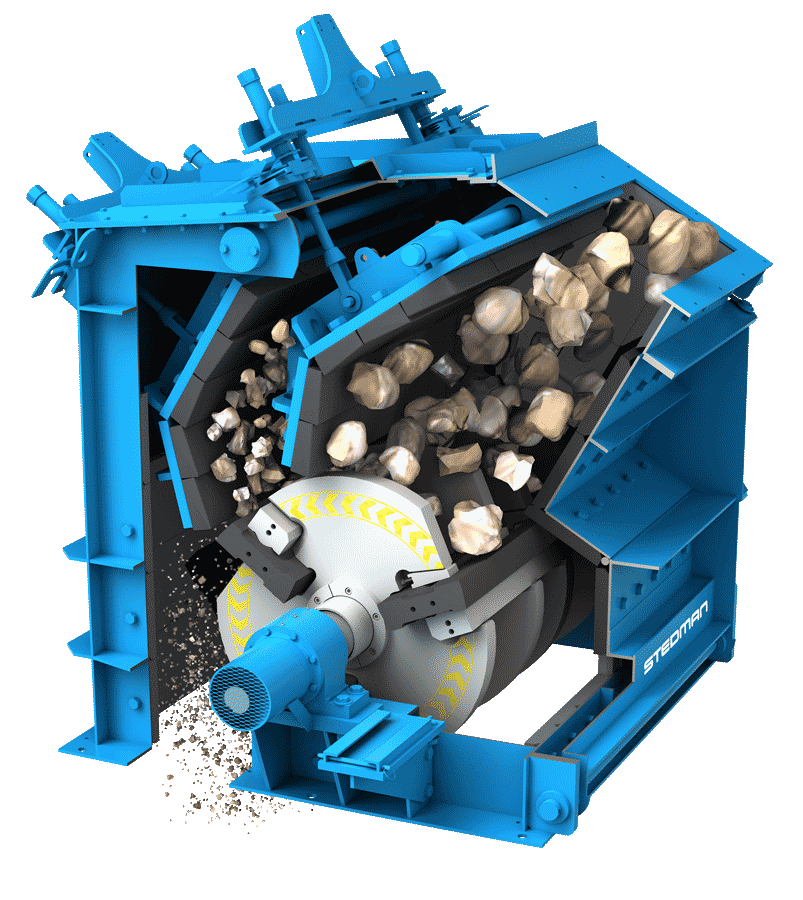
Material type also influences the crusher choice. Abrasive or hard materials tend to wear out HSI breaker bars and aprons faster than VSI rotor tips or anvils, especially in rock-on-rock configurations. In these scenarios, depending on the tons per hour, moisture content and other considerations, VSIs can be more economical over time. Conversely, softer materials like limestone are easily handled by HSIs with minimal wear and excellent reduction capability. Every machine selection setup is customized to the operations’ variables. Contact Stedman to learn the best setup for your application and final output needs.
Application Strategy
In practice, some operations combine both crushing machines strategically. Operators install an HSI crusher for primary or secondary reduction of incoming feed. Plus, a VSI crusher installation downstream refines material into spec-grade sand or aggregate. This complementary configuration allows operators to maximize production while meeting specific market requirements for particle size distribution and shape.
Maintenance and Wear Part Costs
Wear part replacement schedules and costs are another key differentiator between these two size reduction machines. HSI crushers require regular inspection and replacement of breaker bars and apron liners, particularly in high-impact applications. VSIs, while also subject to wear (particularly in rotor tips and anvils), tend to have longer wear life in rock-on-rock setups and lower maintenance demands in applications with consistent feed.
Choosing between a VSI and HSI crusher isn’t a matter of which is better overall—but which is better for your specific material, product goals, and circuit design. VSIs excel in final-stage shaping and sand production, while HSIs dominate in high-volume, primary and secondary reduction.
Understanding how each machine performs in real-world scenarios can help optimize production efficiency, extend equipment life, and improve the quality of your final product.