
Grow Your Operations Without the Growing Pains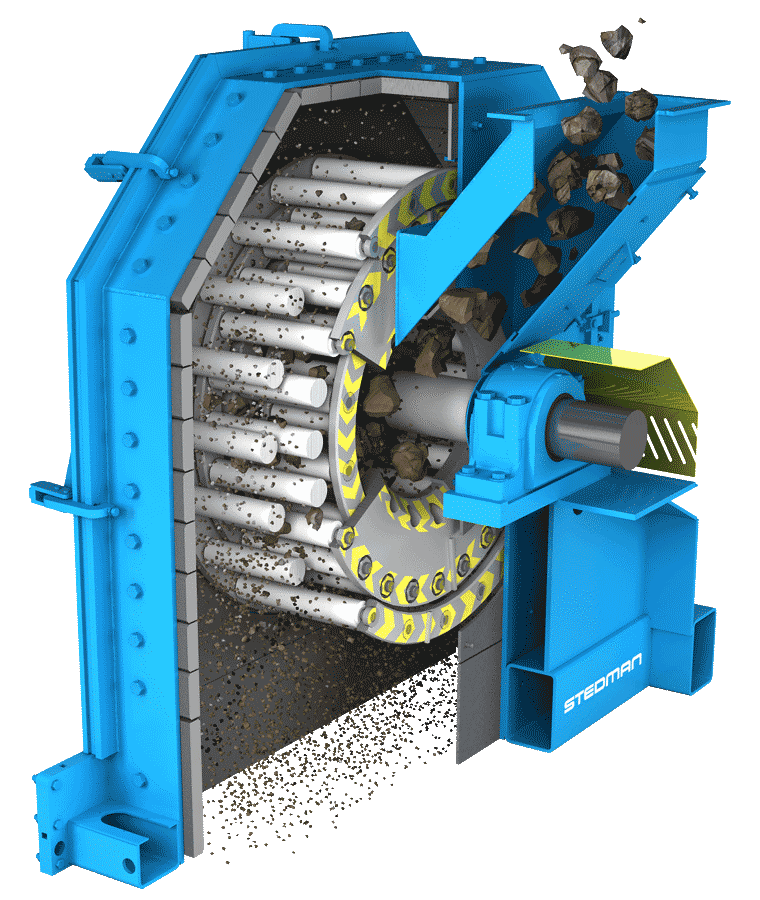
It’s time for your plant’s operations to take production to the next level. But you don’t want to fall into the same heavy equipment purchasing pitfalls so many companies face as they grow. Several operational indicators show a plant or quarry has outgrown its hammer mill and may benefit from a cage mill. The strongest signals usually involve product consistency, maintenance, energy consumption, throughput, and the type of material being processed.
Key Considerations
The hammer mill produces too many fines
The hammer mill may be overworked if the operation generates more ultrafine material than the product specification requires. A cage mill provides controlled particle-size reduction while potentially reducing unwanted fines, depending on the material and process configuration.
Wear-part consumption becomes expensive
Frequent replacement of hammer mill hammers, screens, liners, and other wear components can significantly increase operating costs. An operation should look at total annual wear-part costs, including labor and downtime, not just the purchase price of replacement parts. It may be time to evaluate another size-reduction technology if maintenance becomes a recurring production expense.
Maintenance downtime affects production
A hammer mill that requires frequent inspections, hammer changes, screen changes, or other maintenance can become a bottleneck. Consider upgrading when maintenance:
- Takes the mill offline frequently
- Requires significant labor
- Interrupts production schedules
- Becomes difficult to predict
- Increases as equipment ages
A cage mill may offer a simpler maintenance regimen for certain applications.
Energy consumption per ton increases
Track the hammer mill’s kilowatt-hours per ton of finished product rather than looking only at the motor size. Investigate whether the existing hammer mill operates efficiently or does more size reduction than necessary if energy consumption increases while production remains relatively flat. A cage mill can be attractive when the application calls for efficient impact crushing or fine grinding without the complexity of some other fine-grinding systems.
The operation needs a more consistent product
Product-size consistency is particularly important when the final material is being sold into applications with specific gradation requirements. Consider evaluating whether a different configuration provides better control when operators regularly adjust feed rates, screens, speeds, or other parameters to maintain product specifications.
Feed material characteristics change
A hammer mill that worked well when the quarry or plant processed one material may not be the best choice after feed characteristics change. Evaluate the equipment when dealing with changes in:
- Feed size
- Hardness
- Moisture
- Abrasiveness
- Friability
- Required final particle size
- Production volume
The right size-reduction technology depends heavily on the material and desired product output.
Production requirements increase
If the plant needs substantially more tons per hour, simply increasing the feed rate of an existing hammer mill may not be the best long-term solution. Before adding capacity, compare the cost per ton of increasing production with the existing equipment versus investing in a different size-reduction system.
The existing system becomes too complex
Complexity is an often-overlooked indicator. A cage mill may simplify the process if the hammer mill requires increasingly complex controls, multiple stages of crushing and screening, extensive material handling, or frequent operator adjustments to achieve the desired product. For some quarry applications, cage mills can be particularly attractive because they can perform fine grinding in a relatively straightforward impact-milling system.
You consider a major hammer mill rebuild
This can be the most important trigger as total effective costs balloon. Conduct a replace-versus-rebuild analysis if the hammer mill needs a major rebuild, such as replacing the rotor, bearings, screens, liners, drive components, and other major components. Don’t automatically rebuild it. Analysis includes the cost of rebuilding the hammer mill, expected future maintenance, energy, and downtime versus the total cost of a cage mill, installation, expected maintenance, energy, and projected production. Base the comparison on effective cost per ton over the expected life of the equipment, not the initial equipment price.
The Bottom Line
A plant or quarry must look closely at wear-part costs, maintenance hours, downtime, energy consumption, throughput, product consistency, and operator requirements.
Finally, test the actual feed material before investing. Particle size, moisture, hardness, abrasiveness, and the desired final product can dramatically affect the performance of any size-reduction machine.